
What Does Homeowners Insurance Cover? A Complete Homeowner's Guide
- 3 days ago
- 16 min read

Buying a home is one of the largest financial investments most people will ever make. Yet many homeowners spend more time researching paint colors, appliances, and mortgage rates than they do understanding the insurance policy protecting everything they've worked so hard to build.
That isn't surprising. Homeowners insurance policies aren't exactly light reading. Terms like dwelling coverage, personal liability, replacement cost, and endorsements can make even the most conscientious homeowner's eyes glaze over.
The good news is that understanding your coverage doesn't have to be complicated.
Whether you're purchasing insurance for the first time, reviewing your current policy, or simply wondering whether you're adequately protected, this guide will explain what homeowners insurance typically covers, what it doesn't, and the questions every homeowner should ask before they ever need to file a claim.
Understanding your policy today can help prevent expensive surprises tomorrow.
In This Guide
You may also use your Alt+F search function to find specific terms for which you may need further clarification.
Homeowners Insurance Coverage Explained
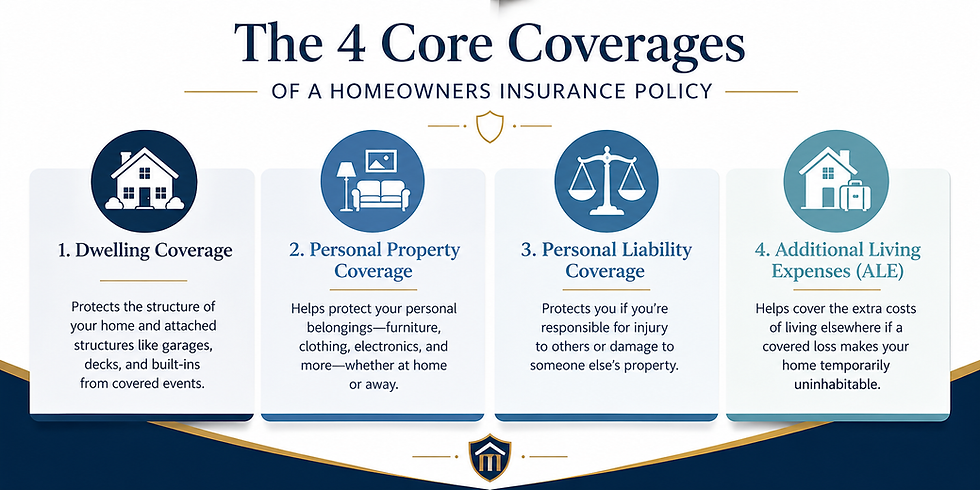
Most homeowners insurance policies are built around four primary types of protection. Together, they help safeguard your home, your belongings, your finances, and your ability to recover after a covered loss.
Those four core coverages are:
Dwelling Coverage protects the structure of your home and permanently attached structures.
Personal Property Coverage protects many of the belongings you own.
Personal Liability Coverage helps protect you financially if you're legally responsible for injuries or property damage to others.
Additional Living Expenses (ALE) helps pay certain extra costs if a covered loss makes your home temporarily uninhabitable.
Although these four categories form the foundation of most homeowners policies, every policy is different. Coverage limits, deductibles, exclusions, endorsements, and policy forms can all affect how much protection you actually have.
Many insurance companies offer different policy forms, such as HO-3 and HO-5 policies. While both provide broad protection, an HO-5 policy generally offers more comprehensive coverage for qualifying homes and personal property than a standard HO-3 policy. If you're unsure which type of policy you have, your insurance professional can explain the differences and whether another option may better fit your needs.
The sections below explain each of these coverages in more detail so you can better understand what your homeowners insurance is designed to protect.
How Is Homeowners Insurance Coverage Calculated?
Before looking at each type of coverage, it's helpful to understand two terms you'll encounter throughout your homeowners insurance policy: replacement cost and actual cash value.
These terms don't determine what is covered. Instead, they help determine how much your insurance company pays after a covered loss.
Understanding the difference is important because two homeowners with similar losses may receive different claim payments depending on how their policies are written.
Replacement Cost
Replacement cost is the amount it would take to repair or replace damaged property using materials or items of a similar kind and quality at today's prices, without deducting for depreciation.
For your home, replacement cost reflects the cost to rebuild your house using current construction materials, labor, and building methods after a covered loss. It is not the same as your home's market value, purchase price, tax assessment, or remaining mortgage balance.
For example, your home may have a market value of $700,000 because of its desirable location, while the cost to rebuild it after a fire could be significantly more or less, depending on local construction costs and building materials.
Likewise, replacement cost for personal belongings generally means replacing an item with a comparable new one, subject to your policy's terms, conditions, and limits.
Actual Cash Value
Actual cash value, often abbreviated as ACV, considers depreciation.
As belongings age, they typically lose value through normal wear and use. Under an actual cash value settlement, your insurance payment reflects the item's value immediately before the loss rather than the cost to purchase a new replacement.
Imagine you purchased a television five years ago for $1,500. If it's destroyed in a covered fire, a replacement cost policy may help pay for a comparable new television today. An actual cash value policy, however, would generally pay only what the five-year-old television was worth immediately before it was damaged.
The same concept can apply to other types of property depending on your policy.
Why It Matters
Many homeowners focus primarily on how much insurance they have. Just as important is understanding how a claim will be settled if something happens.
When reviewing your homeowners policy, ask your insurance professional:
Is my home insured at replacement cost?
Is my personal property covered at replacement cost or actual cash value?
Have rebuilding costs changed enough that my dwelling limit should be updated?
Understanding these differences before a claim occurs can help you make informed decisions about your coverage.
Your Home Should Be Insured to Rebuild—Not to Sell
One of the most common misconceptions among homeowners is that insurance should match the market value of their home.
In reality, homeowners insurance is designed to cover the cost of rebuilding, not the price someone might pay to purchase your home. Real estate values are influenced by factors such as neighborhood demand, school districts, views, and land values. Construction costs are influenced by labor shortages, material prices, contractor availability, building codes, and inflation.
Those two numbers often differ significantly.
That's why it's important to review your dwelling coverage periodically, particularly after:
Major remodeling projects
Kitchen or bathroom renovations
Home additions
Finishing a basement or attic
Installing custom cabinetry or built-ins
Significant increases in local construction costs
Even if you haven't made improvements to your home, rebuilding costs can change over time as labor and material prices fluctuate. Reviewing your coverage every few years can help ensure your policy continues to reflect the actual cost to repair or rebuild your home after a covered loss.
What Does Dwelling Coverage Protect?
Dwelling coverage is the part of your homeowners insurance policy that protects the physical structure of your home.
If your house is damaged by a covered event, dwelling coverage helps pay to repair or rebuild it, up to the policy limits.
In most cases, this includes the home's:
Roof
Exterior walls
Foundation
Floors
Windows
Attached garage
Built-in cabinetry
Plumbing system
Electrical system
Heating and cooling systems
Permanently installed fixtures
Other structures permanently attached to the home, such as attached porches or decks, are typically included as well.
Detached structures, including detached garages, sheds, fences, gazebos, and some guest houses, are often covered separately under another section of the policy.
What Events Are Typically Covered?
Homeowners insurance generally protects your home against sudden, accidental events known as covered perils.
Although every policy is different, common covered perils often include:
Fire and smoke damage
Lightning
Windstorms
Hail
Explosions
Vandalism
Theft
Falling objects
Damage caused by the weight of snow or ice
Certain types of water damage resulting from sudden and accidental plumbing failures
For example, if a severe thunderstorm sends a tree crashing through your roof, dwelling coverage would generally help pay for repairs if the loss is covered under your policy.
Likewise, if a kitchen fire damages part of your home, dwelling coverage typically helps pay to restore the damaged portions of the structure.
What Does Personal Property Coverage Cover?
While your home itself may be your largest investment, everything inside it also has value.
Furniture, clothing, electronics, kitchen appliances, artwork, sporting equipment, tools, books, and countless everyday possessions can add up to hundreds of thousands of dollars over a lifetime.
Personal property coverage helps protect those belongings if they're damaged or destroyed by a covered event.
If a covered fire destroys your furniture, a burglar steals your electronics, or a severe storm damages the contents of your home, personal property coverage may help pay to repair or replace those items, subject to your policy's terms and limits.
Many homeowners are surprised to learn that their belongings may also be protected away from home.
For example, if your luggage is stolen while you're traveling or your laptop is stolen from your vehicle, your homeowners policy may provide coverage, depending on the circumstances and the terms of your policy.
The amount of personal property coverage included in a homeowners policy is often calculated as a percentage of your dwelling coverage, although coverage amounts vary by insurer and policy.
What Personal Property Is Typically Covered?
Although every homeowners policy is different, personal property coverage commonly includes items such as:
Furniture
Clothing and shoes
Televisions
Computers and tablets
Kitchenware and cookware
Small appliances
Sporting equipment
Toys and games
Books
Home décor
Most everyday personal belongings
The key point to remember is that coverage generally depends on the cause of the damage, not simply on the item itself.
If the loss results from a covered peril, your belongings are generally covered, subject to your policy's terms and limits.
Are Jewelry, Artwork, and Other Valuables Fully Covered?
Many homeowners assume that if they have $300,000 of personal property coverage, every item they own is automatically protected up to that amount. In reality, that's often not the case.
Most homeowners insurance policies include special limits for certain categories of property that are more susceptible to theft, difficult to value, or costly to replace.
These categories commonly include:
Jewelry
Watches
Fine art
Antiques
Collectibles
Firearms
Silverware
Musical instruments
Cash and securities
The specific limits vary by insurance company and policy, but they're often lower than homeowners expect.
For example, an engagement ring worth several thousand dollars may only be covered up to your policy's theft limit unless you've purchased additional protection.
If you own valuable jewelry, artwork, antiques, collectibles, wine collections, or other high-value items, ask your insurance professional whether they should be individually insured through a scheduled personal property endorsement (sometimes called a rider or floater). These endorsements insure specific items for their appraised value and often provide broader protection than standard personal property coverage.
The good news is that scheduling valuable items is often more affordable than homeowners expect and can provide valuable peace of mind.
Why Every Homeowner Should Create a Home Inventory
No one wants to think about losing everything they own, but taking a few hours to document your belongings before disaster strikes can make the claims process much easier.
A home inventory doesn't have to be complicated. It can be as simple as:
Taking photos or videos of every room
Saving receipts for major purchases
Recording model and serial numbers for electronics and appliances
Keeping appraisals for jewelry and artwork
Storing digital copies in cloud storage or another secure location
Updating your inventory every year—or after purchasing expensive items—can save countless hours during a claim and help ensure you receive the benefits you're entitled to under your policy.
What Does Personal Liability Coverage Cover?
Homeowners insurance protects far more than your house and belongings. It also helps protect your financial future if you're found legally responsible for accidentally injuring someone or damaging another person's property.
This protection is known as personal liability coverage, and it's one of the most valuable—and least understood—parts of a homeowners insurance policy.
Imagine a guest slips on an icy walkway and suffers a serious injury. Or perhaps your child accidentally throws a baseball through a neighbor's window. Maybe your dog bites a visitor, or you accidentally damage someone else's property while helping a friend.
If you're legally responsible, liability coverage may help pay for:
Medical expenses for injured parties
Legal defense costs
Court-awarded damages, up to your policy limits
Certain settlement costs
Without liability coverage, these expenses would likely come out of your own pocket.
For many homeowners, liability protection is every bit as important as protecting the home itself.
Medical Payments to Others
Most homeowners policies also include Medical Payments to Others coverage.
Unlike liability coverage, this protection can help pay for relatively minor medical expenses regardless of who was at fault.
For example, if a guest trips on your front steps and needs stitches, this coverage may help pay their medical bills without requiring a lawsuit or legal determination of negligence.
It's designed to resolve smaller incidents quickly while helping maintain good relationships with neighbors, friends, and visitors.
Is Your Liability Limit High Enough?
Many standard homeowners policies begin with liability limits of $100,000 or $300,000.
For some homeowners, that may be sufficient.
However, homeowners with significant assets, higher incomes, rental properties, swimming pools, teenage drivers, recreational equipment, or other factors that increase liability exposure may wish to consider higher liability limits or an umbrella policy.
A personal umbrella policy provides an additional layer of liability protection above the limits of your homeowners and auto insurance policies. It can be an affordable way to increase your financial protection against large lawsuits or catastrophic claims.
Discussing your overall liability exposure with your insurance professional can help determine whether your current limits continue to meet your needs.
What Are Additional Living Expenses (ALE)?
If a covered loss makes your home temporarily uninhabitable, homeowners insurance may help pay some of the extra costs of living elsewhere while your home is being repaired or rebuilt.
This coverage is commonly called Additional Living Expenses, or ALE.
Imagine a fire damages your kitchen and much of your home's interior. Even though repairs may take several months, your daily life doesn't stop. You still need a place to live.
Additional Living Expenses coverage may help pay for the reasonable increase in living costs that results from the covered loss, including expenses such as:
Hotel accommodations
Temporary rental housing
Increased restaurant or meal costs
Laundry expenses
Pet boarding, in some situations
Other necessary living expenses that exceed your normal household costs
The goal isn't to improve your lifestyle but to help maintain a similar standard of living while your home is being restored.
Coverage amounts and time limits vary by policy, so it's worth understanding what your policy provides before you ever need it.

What Doesn't Homeowners Insurance Cover?
One of the biggest misconceptions about homeowners insurance is that it covers every type of damage that can happen to a home. It doesn't.
Homeowners insurance is designed to protect against sudden and accidental covered losses, not every problem that may occur over the life of a home.
Understanding what isn't typically covered is just as important as understanding what is.
Flood Damage
One of the most common coverage gaps involves flooding. Standard homeowners insurance policies generally do not cover flood damage caused by rising water from rivers, heavy rainfall, storm surge, or overflowing creeks.
Flood insurance is usually purchased separately through the National Flood Insurance Program (NFIP) or private flood insurance companies.
Even homeowners outside designated flood zones may benefit from evaluating their flood risk, as flooding can occur almost anywhere.
Earthquakes
Damage caused by earthquakes is also generally excluded from standard homeowners insurance policies.
Homeowners in areas with elevated seismic risk may wish to explore earthquake insurance or earthquake endorsements where available.
While damaging earthquakes are relatively uncommon in Virginia, the Commonwealth has experienced significant seismic events in the past, including the 2011 Mineral earthquake that caused damage across multiple states.
Sewer and Drain Backups
Many homeowners are surprised to learn that water backing up through sewers, drains, or sump pumps often requires separate coverage.
Water backup endorsements are typically inexpensive and may help cover one of the more unpleasant—and expensive—types of household damage.
In HO5 policies, such as those offered by Mutual Assurance, sewer and drain backups are covered automatically.
Normal Wear and Tear
Homeowners insurance isn't a maintenance plan. Damage resulting from normal aging, deterioration, corrosion, rust, rot, insect infestations, or deferred maintenance is generally not covered.
Replacing an aging roof, repairing old plumbing, or fixing a worn-out HVAC system typically falls under routine home maintenance rather than insurance.
Mold
Whether mold is covered often depends on what caused it. If mold develops because of a covered loss—such as water escaping from a burst pipe—it may be covered, subject to your policy's terms and limits.
However, mold resulting from long-term moisture issues, humidity, or neglected maintenance is generally not covered.
Home-Based Businesses
Many homeowners now work remotely or operate businesses from home. While your homeowners policy may provide limited coverage for certain business property, it generally isn't designed to insure an entire business operation.
If you run a business from your home, talk with your insurance professional about whether you need additional business property coverage or a separate business insurance policy.
Intentional Damage
Insurance is designed to protect against accidental losses—not intentional acts.
Damage intentionally caused by a homeowner is generally excluded from coverage.
Which Optional Coverages Should Homeowners Consider?
Every home is different, and no two homeowners have exactly the same insurance needs. While a standard homeowners policy provides broad protection, optional coverages—often called endorsements—can help close important coverage gaps.
All of the coverages listed below are standard inclusions in Mutual Assurance's HO5 policy. With any policy, however, it is important to review any exclusions to insure you understand your coverage completely.
Some of the most common endorsements homeowners choose include:
Water Backup Coverage
Water that backs up through a sewer, drain, or sump pump is one of the more common causes of homeowner claims, yet it's often excluded from a standard policy.
A water backup endorsement can help pay for cleanup, repairs, and damaged belongings if this type of loss occurs.
Service Line Coverage
Many homeowners don't realize they may be responsible for underground utility lines running between their home and the street.
If a buried water, sewer, gas, or electrical line fails on your property, repairs can cost thousands of dollars. Service line coverage helps protect against many of these unexpected expenses.
Identity Theft or Identity Fraud Coverage
Recovering from identity theft often involves more than replacing a credit card. Expenses may include legal fees, document replacement, lost wages, and professional assistance restoring your identity.
Many insurers offer endorsements that help cover these costs while providing access to fraud recovery specialists.
Scheduled Personal Property
As discussed earlier, homeowners with valuable jewelry, artwork, antiques, firearms, musical instruments, or collectibles may benefit from scheduling these items individually to provide broader protection and higher coverage limits.
Every homeowner's situation is unique. An annual conversation with your insurance professional can help determine whether optional coverages make sense for your home, lifestyle, and financial situation.
How Often Should You Review Your Homeowners Insurance?
Many homeowners purchase insurance when they buy their home and then rarely think about it again.
Unfortunately, life doesn't stand still—and neither should your insurance coverage.
A policy that fit your needs five years ago may no longer provide the protection you need today.
Consider reviewing your homeowners insurance whenever you experience major life changes, including:
Completing a renovation or home addition
Remodeling a kitchen or bathroom
Finishing a basement or attic
Purchasing expensive jewelry, artwork, or collectibles
Installing a swimming pool or trampoline
Starting a home-based business
Getting married or divorced
Receiving an inheritance
Purchasing high-value electronics or furnishings
Even if nothing major has changed, it's a good idea to review your coverage with your insurance professional every year or two.
Construction costs continue to fluctuate, and new endorsements or policy options may be available that weren't offered when your policy was first written.
A periodic review helps ensure your coverage continues to reflect your home's value and your family's changing needs.
Questions Every Homeowner Should Ask Their Insurance Professional
Insurance isn't just about buying a policy—it's about understanding it. Whether you're shopping for coverage or reviewing your current policy, asking the right questions can help you identify potential gaps before they become expensive surprises.
Consider asking:
Is my home insured to its estimated rebuilding cost?
Is my personal property covered at replacement cost or actual cash value?
What deductible do I have, and would changing it make sense?
What exclusions apply to my policy?
Do I need separate flood or earthquake insurance?
Should I add water backup or service line coverage?
Do I have enough liability coverage for my assets?
Should I consider a personal umbrella policy?
Are my jewelry, artwork, or collectibles adequately insured?
Are there discounts or policy changes that could benefit me?
A knowledgeable insurance professional should be able to explain your options in clear, understandable language—not just hand you a policy and hope you never have questions.
Homeowners Insurance Review Checklist
If it's been a while since you've reviewed your homeowners insurance, use this checklist as a starting point.
✔ I know how much it would cost to rebuild my home today.
✔ I understand the difference between replacement cost and actual cash value.
✔ My dwelling coverage reflects current rebuilding costs.
✔ I've reviewed my deductible and understand how it works.
✔ My personal property coverage reflects what I own today.
✔ I've documented my belongings with a home inventory.
✔ My jewelry, artwork, collectibles, or other valuables are properly insured.
✔ I've reviewed my liability limits.
✔ I've considered whether an umbrella policy makes sense.
✔ I understand what my homeowners policy doesn't cover.
✔ I've evaluated whether flood insurance is appropriate for my property.
✔ I've discussed optional endorsements such as water backup, service line, or identity theft coverage.
✔ I've reviewed my homeowners insurance within the last two years.
If you couldn't confidently check every box, now is a great time to schedule a policy review.
Frequently Asked Questions About Homeowners Insurance
Does homeowners insurance cover roof leaks?
It depends on what caused the leak.
If your roof is damaged by a covered peril—such as a windstorm, hailstorm, or a fallen tree—and water enters your home as a result, homeowners insurance will typically help cover the repairs, subject to your policy's terms and deductible.
However, if the leak develops because the roof has reached the end of its useful life or hasn't been properly maintained, the damage is generally considered a maintenance issue and isn't covered.
Does homeowners insurance cover water damage?
Often, yes—but not all types of water damage.
Most homeowners policies cover sudden and accidental water damage, such as a burst pipe, an overflowing washing machine, or certain plumbing failures.
However, damage caused by flooding, groundwater, sewer backups, or long-term leaks is often excluded unless you've purchased additional coverage. Because the cause of the water damage matters, it's important to understand what your policy does and doesn't cover.
Does homeowners insurance cover mold?
Sometimes.
If mold develops because of a covered loss—such as water escaping from a burst pipe—it may be covered, subject to your policy's terms, conditions, and limits.
Mold caused by long-term moisture problems, humidity, poor maintenance, or neglected repairs is generally not covered.
Does homeowners insurance cover fallen trees?
It depends on why the tree fell.
If a healthy tree falls because of a covered event, such as a windstorm or lightning strike, homeowners insurance will generally help pay for damage to your home and may also cover removal of the tree from the damaged structure.
If a dead or poorly maintained tree falls because it was diseased or rotting, coverage may be limited or unavailable, particularly if the damage could have been prevented through proper maintenance.
Does homeowners insurance cover stolen packages?
In many cases, yes.
If a package is stolen from your front porch after it has been delivered, your homeowners insurance may provide coverage under your personal property protection, subject to your deductible and policy limits.
However, because deductibles often exceed the value of a single package, many homeowners choose not to file a claim for smaller thefts. Some retailers and shipping companies also offer reimbursement programs that may resolve the loss without involving your insurance.
Does homeowners insurance cover my belongings when I'm traveling?
Often, yes.
Many homeowners policies provide coverage for personal belongings even when they're temporarily away from home.
For example, if luggage, electronics, or other personal items are stolen while you're traveling, your homeowners insurance may help cover the loss, subject to your policy's terms, exclusions, and limits.
How much homeowners insurance do I need?
The goal isn't to insure your home for its market value—it's to insure it for the cost to rebuild after a covered loss.
That amount can change over time as construction costs, labor, and building materials increase. It's also important to carry enough personal property and liability coverage to protect your belongings and financial assets.
Reviewing your policy every year or two with your insurance professional is one of the best ways to ensure your coverage continues to meet your needs.
Is homeowners insurance required by law?
No. Homeowners insurance isn't required by state law in most cases.
However, if you have a mortgage, your lender will almost certainly require you to maintain homeowners insurance until the loan is paid off.
Even after your mortgage is paid in full, maintaining adequate insurance remains one of the most effective ways to protect your home and finances from unexpected losses.
How often should I review my homeowners insurance?
A good rule of thumb is to review your policy every year or two, or whenever you experience a major life event.
That includes remodeling your home, purchasing expensive personal property, getting married, starting a home-based business, or making other significant financial changes.
Regular policy reviews can help ensure your coverage keeps pace with your home's rebuilding costs and your family's evolving needs.
The Bottom Line
Your homeowners insurance policy should never be a mystery.
Understanding what it covers, what it doesn't, and when additional protection may be appropriate can help you make confident decisions before you ever need to file a claim.
The best time to review your coverage isn't after a loss—it's today. Whether you've owned your home for six months or sixty years, taking a few minutes to discuss your policy with your insurance professional can help ensure you're protecting one of your most valuable investments with confidence.



Comments